

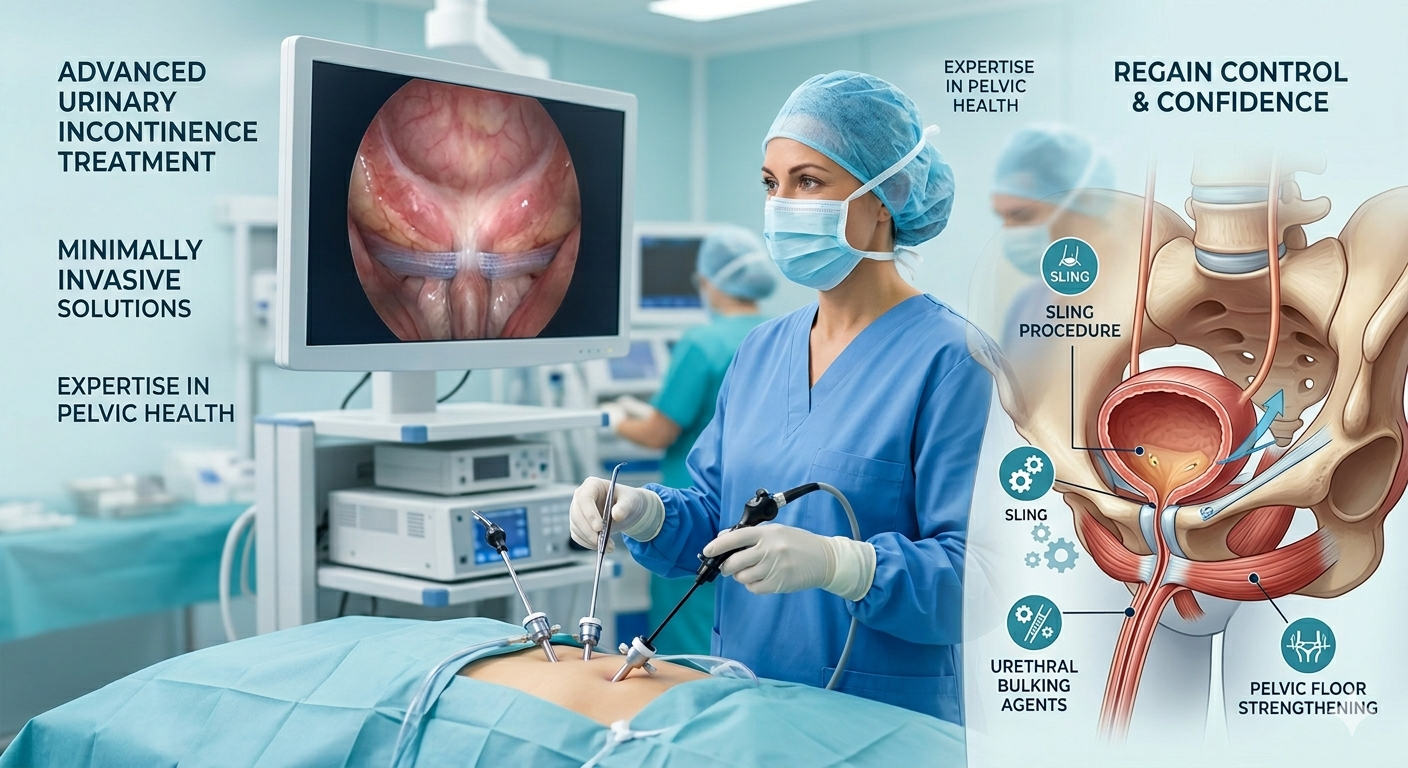
Urinary Incontinence (Leakage) Treatment in Thane
Urinary Incontinence (UI) is the involuntary leakage of urine and is a common condition affecting many women. Although it is often embarrassing to discuss, urinary incontinence is treatable in most cases with proper medical care and lifestyle management. It usually occurs when the muscles and tissues that support the bladder become weak, leading to loss of bladder control and accidental urine leakage.
At Dr. Rachana Agarwal, comprehensive evaluation and advanced treatment options are available to help women regain bladder control, confidence, and quality of life.
Types of Urinary Incontinence
Stress Urinary Incontinence (SUI)
Stress urinary incontinence occurs when urine leaks during activities that put pressure on the bladder, such as:
- Coughing
- Sneezing
- Laughing
- Exercise
- Lifting heavy objects
This condition usually develops due to weakening of the pelvic floor muscles and tissues, commonly after childbirth, aging, or menopause.
Overactive Bladder (OAB) / Urgency Urinary Incontinence
- Sudden and uncontrollable urge to urinate
- Frequent visits to the toilet
- Leakage before reaching the restroom
- Feeling of emergency to empty the bladder immediately
This condition may occur due to aging or medical conditions such as diabetes, stroke, or neurological disorders.
Overflow Incontinence
Overflow incontinence happens when the bladder does not empty completely, causing urine to leak frequently due to overfilling.
Possible causes include:
- Underactive bladder
- Diabetes
- Neurological disorders
- Obstruction in urinary flow
- Enlarged prostate in men
Mixed Incontinence
Mixed incontinence refers to a combination of more than one type of urinary incontinence, most commonly stress incontinence and overactive bladder symptoms together.
Causes of Urinary Incontinence
Urinary incontinence is often a symptom of an underlying medical condition rather than a disease itself.
Common causes include:
- Urinary tract infections (UTI)
- Constipation
- Diabetes
- Stroke
- Multiple sclerosis
- Menopause
- Childbirth-related pelvic muscle weakness
- Certain medications
- Previous pelvic surgeries
- Aging and hormonal changes
Diagnosis of Urinary Incontinence
A detailed evaluation is necessary to identify the exact cause of bladder leakage. Diagnosis may include:
- Medical history and symptom assessment
- Physical examination
- Urine test to detect infections
- Ultrasound scan after bladder emptying
- Stress test during coughing or sneezing
- Review of medications and lifestyle habits
Treatment Options for Urinary Incontinence
Treatment depends on the type and severity of the condition and may include:
Lifestyle Modifications
- Fluid and diet management
- Weight control
- Bladder training
- Scheduled toilet habits
Pelvic Floor Exercises
- Strengthening exercises to improve bladder control
- Helpful especially in stress urinary incontinence
Medications
- Medicines to relax bladder muscles or improve bladder control
Surgical Treatment
- Advanced procedures for severe or persistent urinary leakage
- Recommended when conservative treatments are not effective