

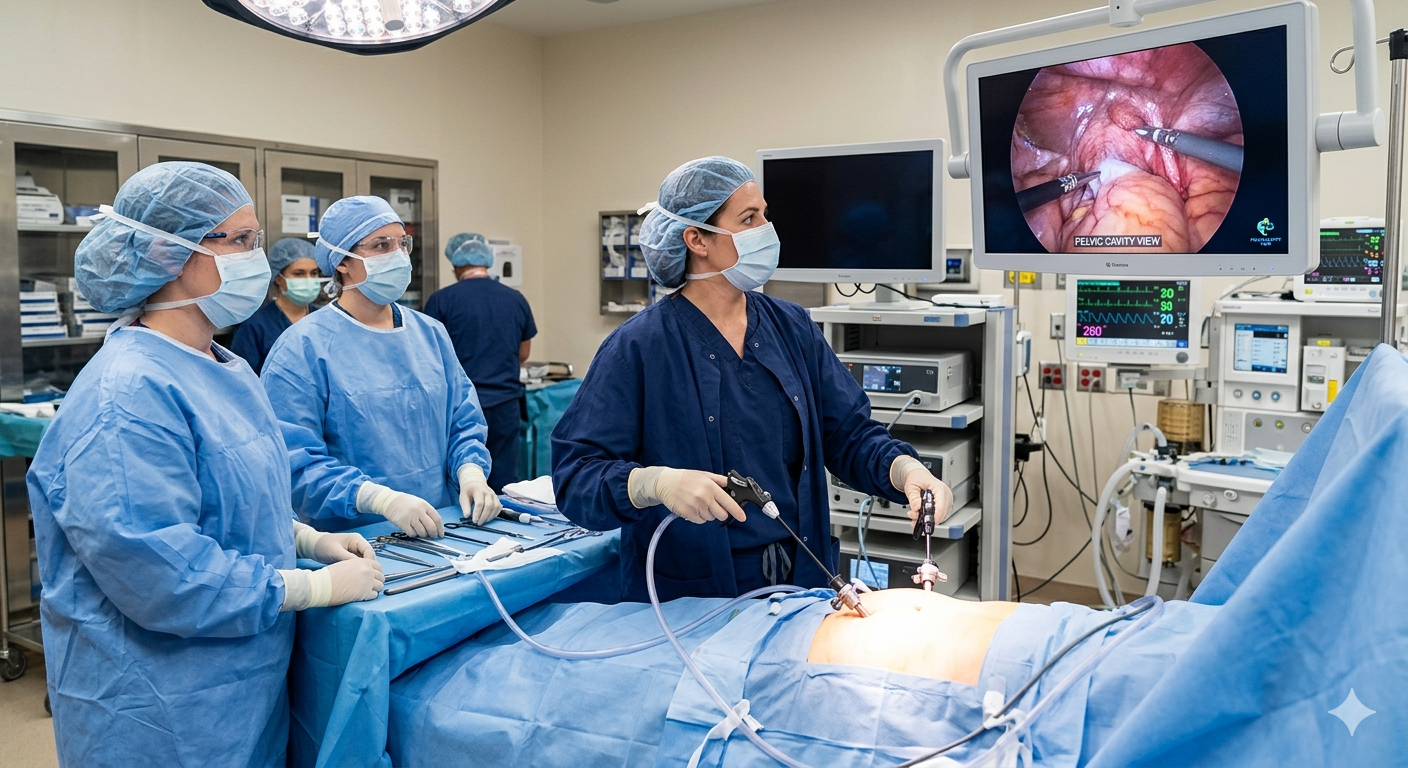
Laparoscopic Hysterectomy
Laparoscopic hysterectomy is a minimally invasive surgical procedure performed to remove the uterus and cervix, with or without the ovaries. This advanced technique is widely preferred because it involves smaller incisions, reduced pain, faster recovery, and minimal scarring compared to traditional open surgery.
At Dr. Rachana Agarwal, patients receive expert care and advanced laparoscopic treatment for various gynecological conditions with a focus on safety, comfort, and quicker healing.
How is a Laparoscopic Hysterectomy Done?
The procedure is performed under general anaesthesia by a gynecologist.
A drip is inserted into the patient’s arm before surgery.
A urinary catheter is placed after anaesthesia for bladder drainage.
A small incision is made near the navel.
The abdomen is gently inflated with gas for better visualization.
A laparoscope (tiny camera) is inserted through the incision.
The surgeon views the internal organs on a monitor while performing the surgery.
Two to three additional small incisions may be made in the lower abdomen.
Specialized surgical instruments are inserted through these incisions.
The uterus and cervix are removed, with or without the ovaries, usually through the vaginal route.
The incisions are closed carefully in layers.
The entire procedure generally takes around one to two hours.
Types of Hysterectomy
Partial Hysterectomy
Removal of the uterus while preserving the cervix.
Recommended in selected cases depending on the patient’s condition.
Total Hysterectomy
Complete removal of the uterus and cervix.
In some cases, the ovaries and fallopian tubes may also be removed.
Provides long-term relief from severe gynecological disorders.
Who Should Consider Hysterectomy?
Hysterectomy is usually recommended when medications and non-surgical treatments fail to provide relief. Conditions that may require laparoscopic hysterectomy include:
Uterine fibroids
Chronic pelvic pain
Severe endometriosis
Adenomyosis
Vaginal prolapse
Abnormal uterine bleeding
Uterine, cervical, ovarian, or endometrial cancers
Large pelvic tumors
Benefits of Laparoscopic Hysterectomy
Minimally invasive procedure
Smaller incisions and less scarring
Reduced blood loss
Less post-operative pain
Lower risk of infection
Faster recovery and shorter hospital stay
Early return to daily activities
For some patients, laparoscopic hysterectomy may not be suitable, especially in cases involving severe obesity, extensive scar tissue from previous surgeries, or certain underlying medical conditions. A detailed consultation with an experienced gynecologist helps determine the most appropriate treatment approach.